

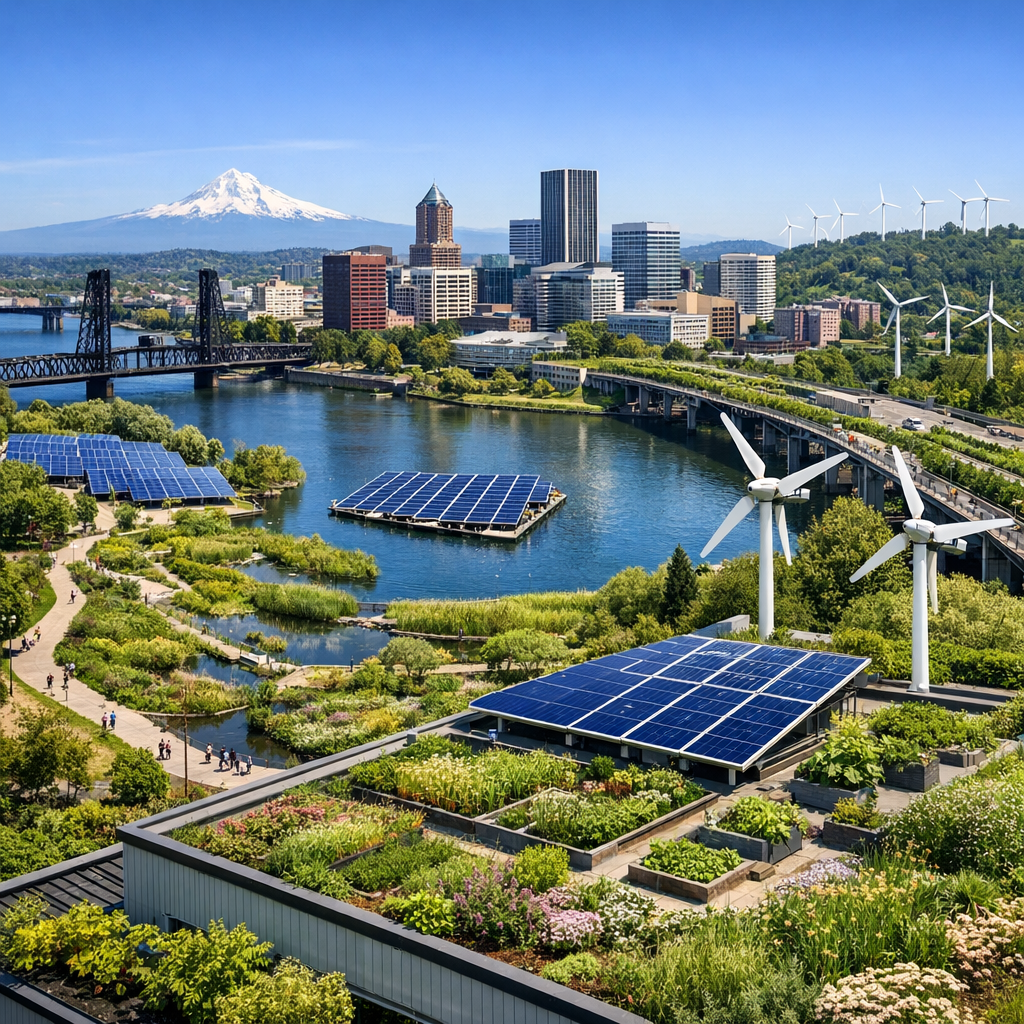
As climate change continues to affect regions worldwide, Portland is taking significant steps to adapt and build resilience against its impacts. The city is experiencing warmer temperatures, altered precipitation patterns, and more frequent extreme weather events, necessitating a comprehensive approach to climate adaptation.
Understanding the Challenges
Portland has observed notable climate shifts, including:
- Extended Allergy Seasons: The freeze-free growing season has lengthened by 30 days since 1970, leading to prolonged pollen production and exacerbated allergy symptoms for residents.
- Increased Heat Events: The city has seen a rise in extreme heat streaks, with about two more such events annually compared to 1970, posing health risks and stressing infrastructure.
- Urban Heat Islands: Over 70% of Portlanders are affected by urban heat islands, where temperatures can feel at least 8°F higher than surrounding areas due to infrastructure and lack of green spaces.
Portland’s Proactive Measures
In response to these challenges, Portland has implemented several strategies:
Water System Resilience
The Portland Water Bureau is committed to ensuring a robust water supply by:
- Investing in infrastructure to adapt to climate impacts like increased heat, floods, and wildfires.
- Reducing greenhouse gas emissions with a goal of net-zero emissions by 2050.
- Utilizing renewable energy sources, including hydroelectric power.
Transportation Adaptation
The Oregon Department of Transportation (ODOT) is addressing climate change by:
- Assessing vulnerabilities in the transportation system to natural hazards like wildfires and floods.
- Implementing strategies to enhance infrastructure resilience, such as retrofitting culverts to handle increased streamflows.
Public Health Initiatives
The Oregon Health Authority emphasizes the importance of climate adaptation in public health by:
- Developing resources to help communities prepare for health risks associated with climate change.
- Focusing on protecting vulnerable populations from climate-related health impacts.
Community Involvement
Local organizations, such as the Bird Alliance of Oregon, are also contributing by:
- Integrating climate modeling into habitat protection and restoration efforts.
- Promoting bird-friendly renewable energy development to minimize habitat loss.
Through these concerted efforts, Portland is proactively addressing the multifaceted challenges posed by climate change, aiming to safeguard its environment and the well-being of its residents for generations to come.