

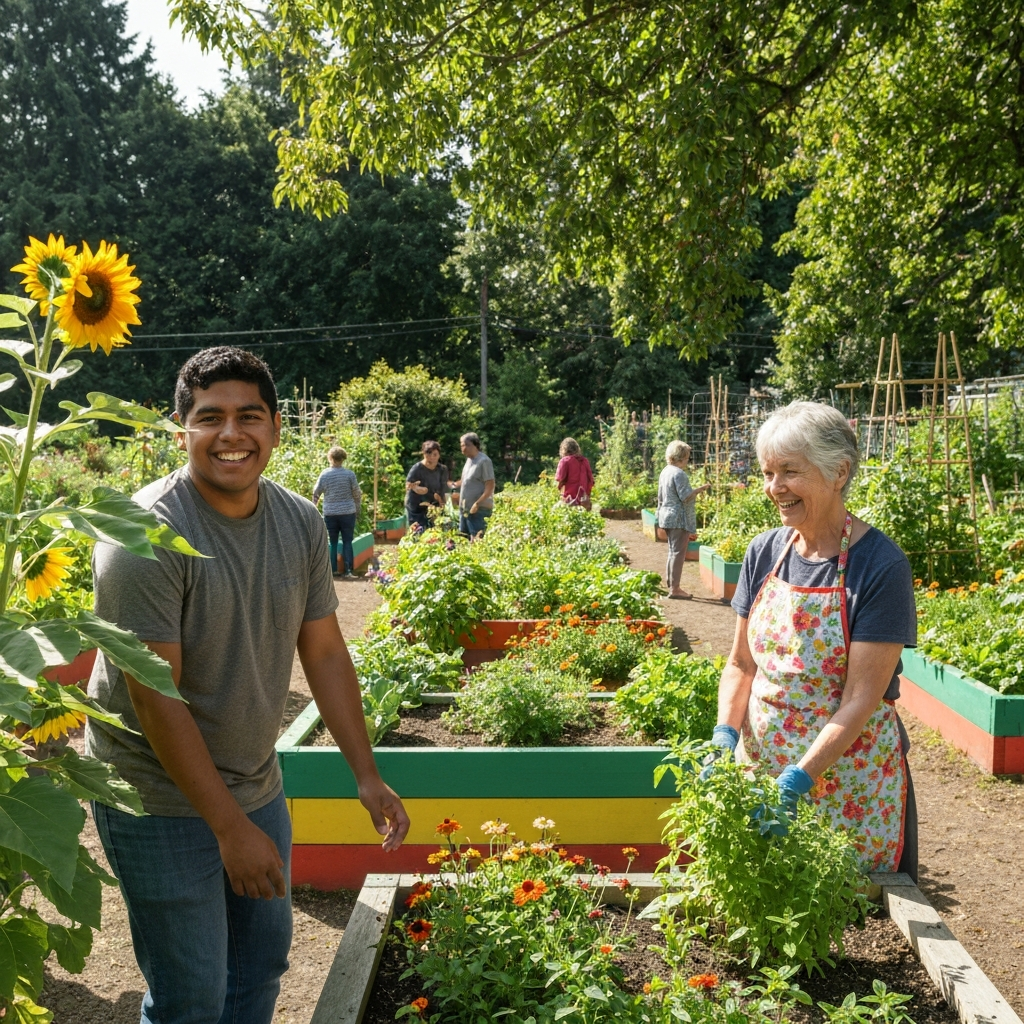
Portland’s community gardens are more than just plots of land for growing vegetables; they are vibrant spaces that foster connections, promote sustainability, and enhance urban life. Since 1975, the city has developed 60 community gardens across various neighborhoods, providing residents with opportunities to engage in gardening and community building.
Benefits of Community Gardens
These gardens offer numerous advantages:
- Social Connections: They serve as gathering places where neighbors can meet, share knowledge, and collaborate on projects, strengthening community bonds.
- Environmental Impact: By promoting organic gardening practices, community gardens contribute to urban greening and biodiversity, improving air quality and providing habitats for pollinators.
- Food Security: They enable residents to grow their own fresh produce, which is particularly beneficial in areas with limited access to affordable, healthy food.
Notable Community Gardens in Portland
Several gardens stand out for their unique contributions:
Knott Community Garden
Established in 2021, the Knott Community Garden addresses the high demand for garden plots in Portland. Located at 11510 NE Knott Street, it provides families along the 122nd and 102nd Avenue corridors with accessible gardening opportunities. The garden was developed with a $75,000 allocation approved in March 2020, aiming to ensure that every household has a community garden within one mile. Learn more about Knott Community Garden.
Frazer Community Garden
Located within Frazer Park at NE 52nd Avenue and Pacific Street, the Frazer Community Garden was established in 2011 through a collaborative effort involving the Rose City Park Neighborhood Association, Friends of Portland Community Gardens, and Depave. The garden incorporates sustainable design practices, including a native bioswale, water harvesting, and pollinator plants. Discover more about Frazer Community Garden.
Fertility Garden
Managed by the Urban Farm Collective, Fertility Garden is situated at 3924 and 3930 NE Garfield Street. This educational community garden continues the vision of Reverend Jeanne Walker, who worked with neighborhood youth to teach gardening and life skills. The garden produces compost from local food scraps, supplying several other community gardens in the area. Read about Fertility Garden.
Getting Involved
Residents interested in participating can:
- Request a Plot: Apply for a garden plot through the Portland Community Gardens program. Find a community garden near you.
- Volunteer: Engage in volunteer opportunities to support garden maintenance and community events. Learn about volunteering with Community Gardens.
- Donate Produce: Contribute surplus harvests to local food pantries through the Produce for People program. Join the Produce for People initiative.
Portland’s community gardens exemplify the city’s commitment to sustainability, community engagement, and urban agriculture. By participating, residents not only cultivate fresh produce but also nurture a sense of belonging and shared responsibility for their environment.