

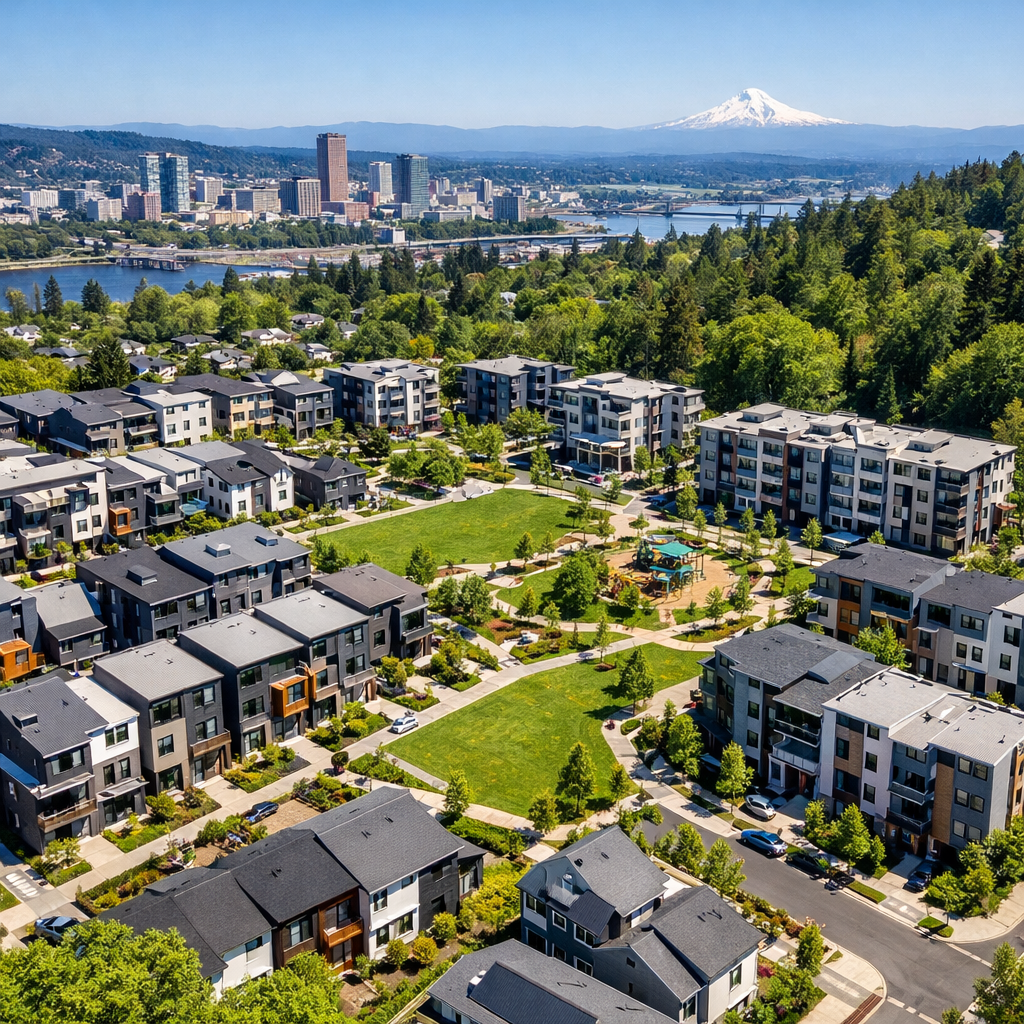
Portland’s housing market is undergoing significant transformations, influenced by fluctuating home prices, rental trends, and ambitious development projects. Understanding these changes is crucial for residents and prospective homeowners alike.
Current Housing Market Trends
As of April 2026, the average home value in Portland stands at $538,687, reflecting a slight decrease of 0.9% over the past year. Homes typically go pending in around 10 days, indicating a competitive market. The median sale price is $508,633, with 34.5% of sales closing above the list price, underscoring strong demand.
Rental Market Dynamics
Renters have experienced some relief, with median rent prices dropping by 1.8% year-over-year to approximately $1,600. Despite this decline, affordability remains a challenge for many residents.
Notable Development Projects
Several development initiatives are underway to address housing needs:
Lents 92H
Located along SE 92nd Avenue, Lents 92H is a two-phase housing development comprising 219 residential units. The project emphasizes pedestrian-friendly design and includes a mix of studios to three-bedroom apartments.
Mass Timber and Housing Innovation Campus
The Port of Portland is transforming a historical marine terminal into the Mass Timber and Housing Innovation Campus. This 39-acre site will feature a mass timber modular manufacturing facility aimed at producing affordable housing, alongside research labs and workforce training spaces.
Dekum Court Affordable Housing
In the Concordia neighborhood, the Dekum Court redevelopment will provide 187 affordable housing units. The project focuses on creating a community-centric environment with ample outdoor spaces and pedestrian connections.
Challenges and Future Outlook
Despite these developments, Portland faces challenges in housing affordability. Nearly 90% of homes are deemed unaffordable for middle-income households earning around $95,000 annually. Additionally, the rise in homeowners association (HOA) fees adds to the cost burden, with about 35% of homes sold in Oregon in 2025 including HOA dues.
Efforts to promote “middle housing”—such as duplexes and fourplexes—aim to alleviate the housing crunch. Since the adoption of the Residential Infill Project in 2021, approximately 23% of new homes have been classified as middle housing.
As Portland continues to evolve, staying informed about these trends and developments is essential for navigating the city’s housing landscape.