

By Isabella Taylor
Recent Shifts in Prices and Inventory
The median home sale price in Portland is now around $525,000, a slight drop of 3–4% compared to the same period last year. Homes are selling faster—on average in 17 to 19 days—reflecting increased urgency among buyers and a tight but not frenzied market. Buyers are still facing competition, though it’s less intense than recent years. Median home values have edged up marginally year over year according to some indexes.
Rentals: Smaller Spaces, Higher Prices
Portland renters are seeing a trend toward smaller units: new apartments are shrinking in size, even as rents continue to rise. Many newer buildings offer fewer amenities, especially in terms of outdoor or communal space, in exchange for proximity to transit, downtown, or commercial hubs. For many renters, affordability now hinges on trade-offs—size, location, or shared facilities.
Affordable Housing Initiatives & Policy Moves
The city’s Housing Production Strategy, adopted in mid-2024, outlines more than 35 actions to increase housing capacity, enhance equity, and meet climate goals. Key steps include rezoning to enable more affordable units, speeding up permitting, and supporting mixed-income and family-sized homes.
Portland’s share of the Metro Affordable Housing Bond is now supporting over 2,100 units that are either completed or in development. More than 1,000 of those are family-sized units with two or more bedrooms, and there are also dozens of units designated for permanent supportive housing and deeply affordable rents.
New Development Projects to Watch
Jamii Court (West Portland Park): 96 affordable homes on a former motel site, including family sized units and culturally specific services for communities at risk of displacement.
Broadway One: This high-rise project in the Broadway Corridor will be the tallest mass timber structure in the region. It includes affordable housing plus integrated services aimed at supporting long-term stability for residents.
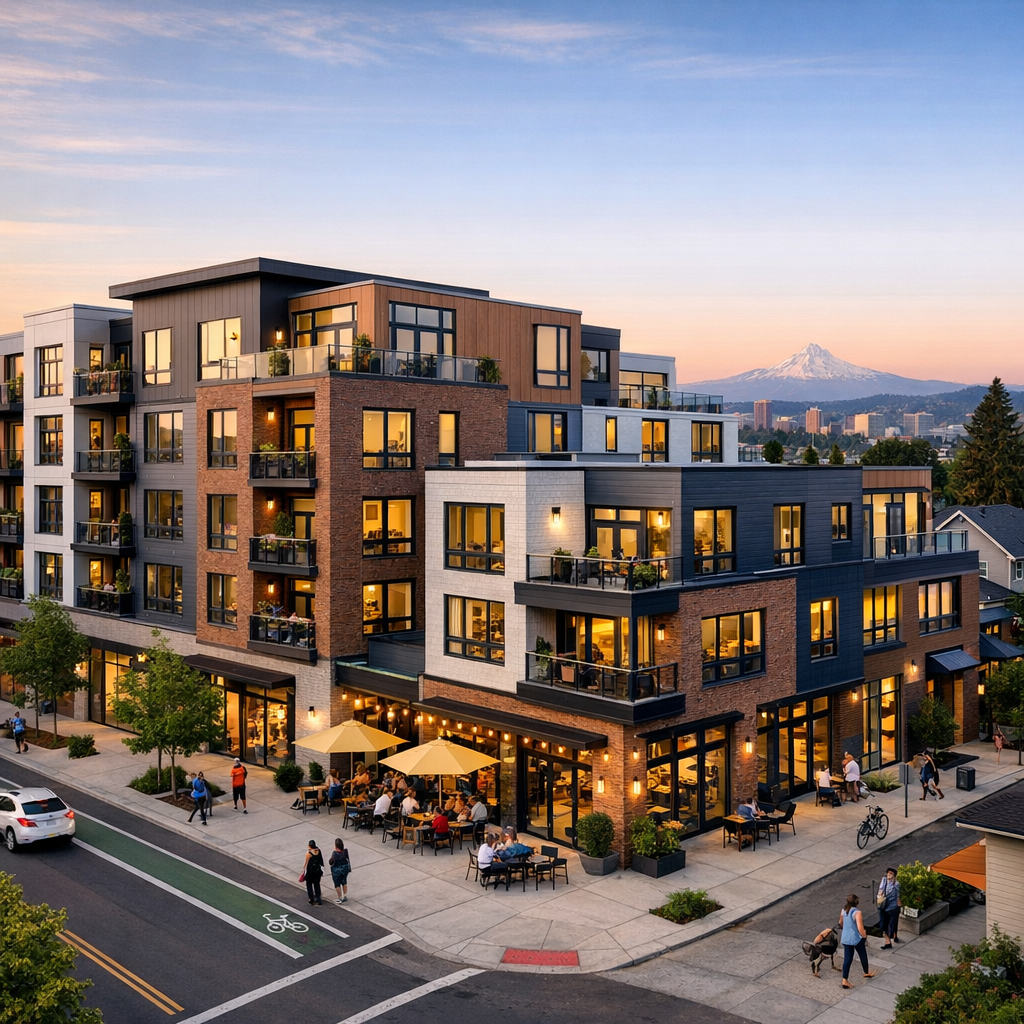
Inner Eastside Zoning & 82nd Avenue Efforts: Zoning changes in the Inner Eastside are expanding mixed use and multi-dwelling opportunities. Along 82nd Avenue, master plans are underway to address displacement, transit access, and better infrastructure.
What Buyers, Renters, and Neighbors Should Keep in Mind
- Interest rates remain a major factor. Even if home prices have softened slightly, financing costs still shape what many buyers can afford. Long-term budgeting for mortgage payments and maintenance remains essential.
- For renters—prioritizing location may sometimes mean sacrificing size or amenities. Looking a bit farther out or considering shared housing might yield more affordable rent.
- Stay aware of major policy changes—zoning, bond funding, inclusionary housing rules—as they can open up new opportunities for affordability, ownership alternatives, or housing types like duplexes, ADUs (accessory dwelling units), and “middle housing.”
- Neighborhood engagement matters. Many future projects—especially those aiming to counter displacement—rely on community input around design, services, and what’s truly needed locally.
Looking Ahead
Portland’s housing market appears to be in a transition: trending toward greater affordability, more diverse housing types, and more intentional community planning. Though challenges—especially for renters—persist, recent development approvals and affordable-housing investments suggest momentum toward change.
For anyone buying, renting, or just watching how Portland grows, it’s worth keeping an eye on what’s approved—not just what’s under construction—because policy choices and planning decisions now will shape housing options for years to come.